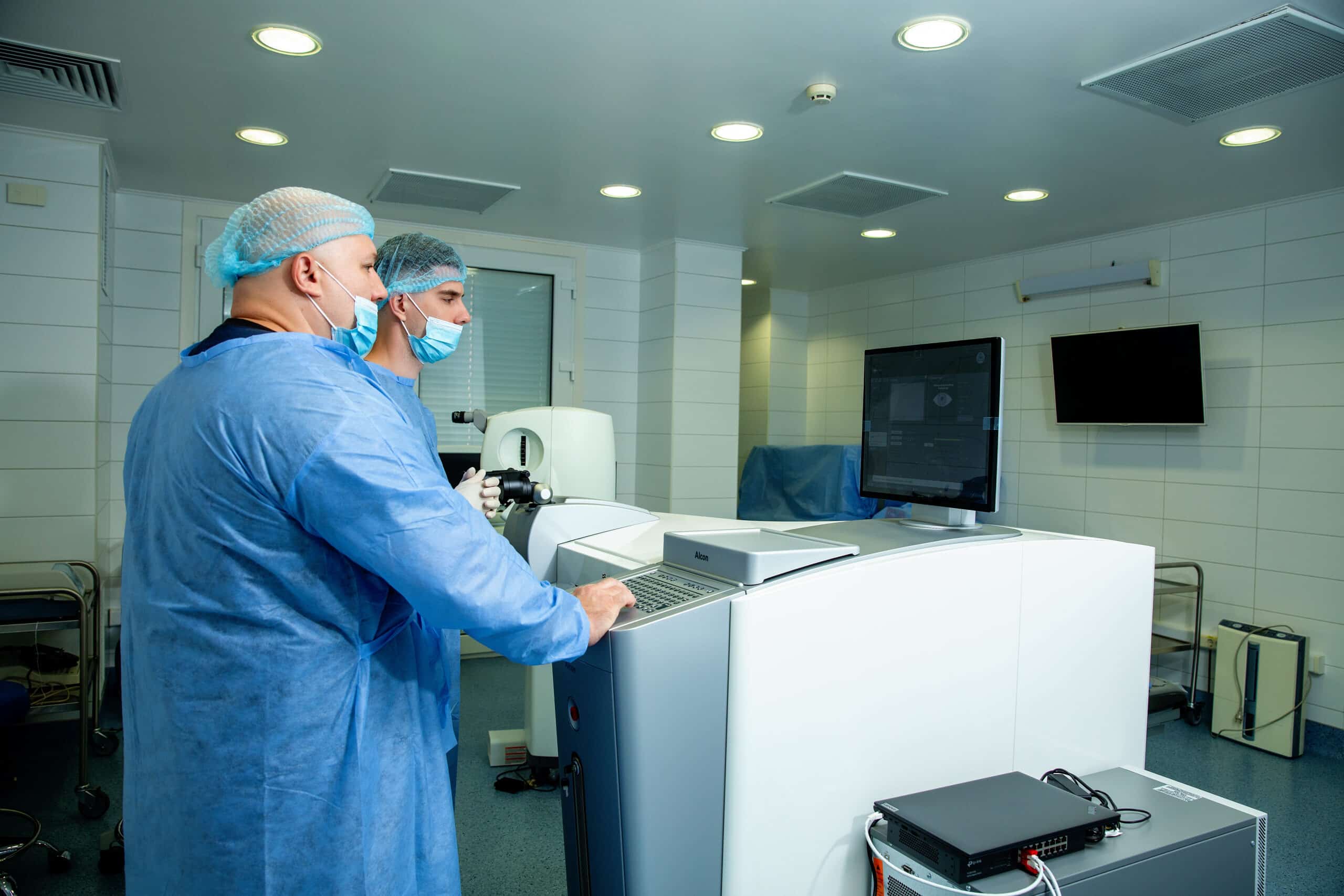

- Femtolaser vision correction Femto LASIK
- Ultra-precise excimer laser WaveLight® EX500 with CONTOURA technology
- Laser correction with Super LASEK technology
- Laser vision correction Super LASIK Thin Flap
- Laser vision correction with 5D SportSmartSurf technology
- Laser correction of presbyopia (age-related farsightedness) – A new technique
- Wave Scan Analyzer
- Equipment for excimer laser vision correction
- Before and after laser vision correction
- Laser correction in questions and answers
- Laser vision correction: myths and reality
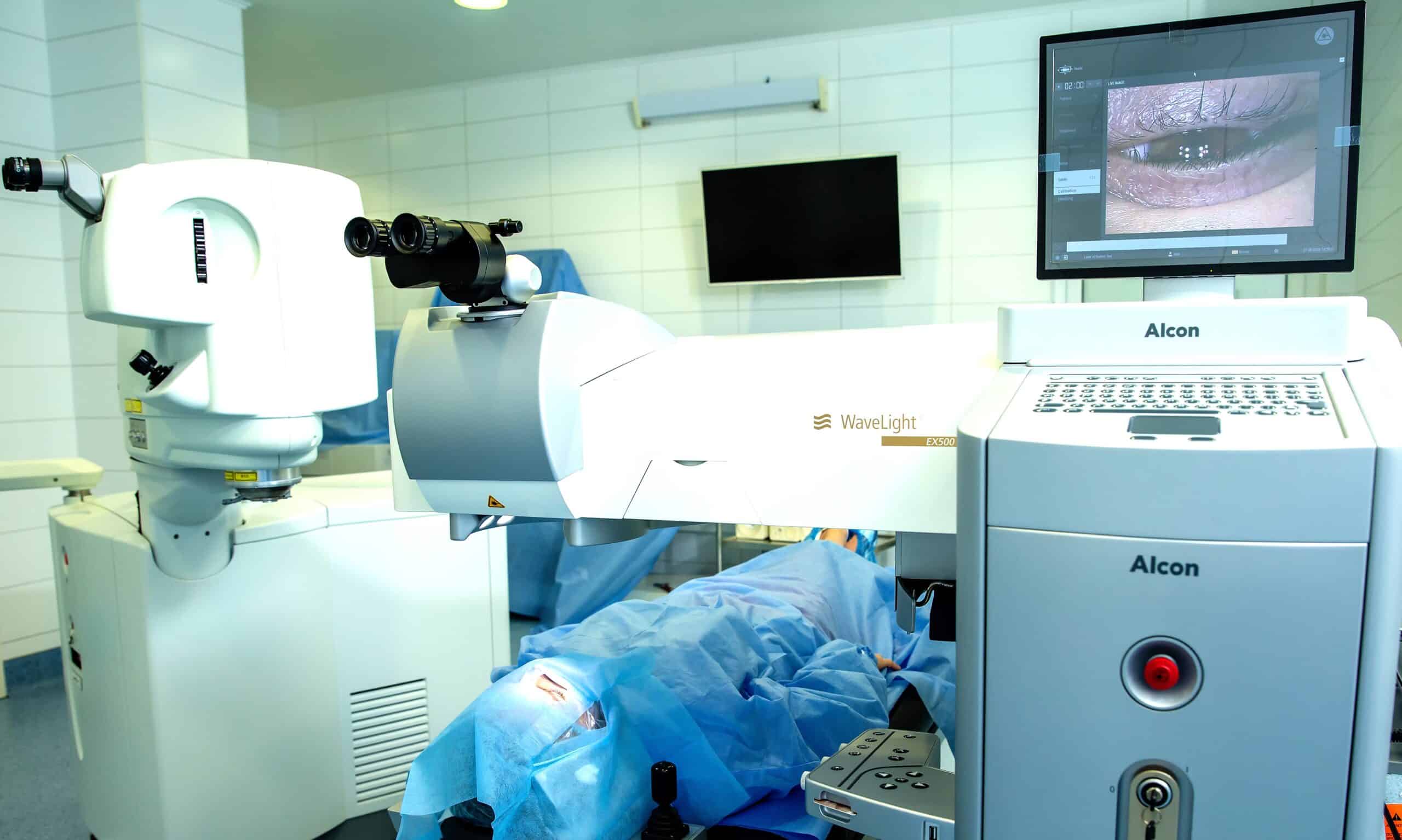
The procedures are performed using a state-of-the-art WaveLight® EX500 laser system, which is an intelligent thermal control system. The pulses are distributed individually and the thermal load on the cornea is minimized. During the surgery, the cornea is actually not exposed to heat. Thus, the recovery is quick without making the patient face any difficulties or inconveniences in everyday life.
Benefits of laser vision correction
Laser correction of myopia, hyperopia, and astigmatism allows you to see the world with your very own eyes. Glasses and contact lenses solve the problem of poor eyesight just for a while: as soon as you take them off, the outlines lose their sharpness, colors fade, objects get blurred…
Laser correction gives you more than just good eyesight. It also means freedom from glasses and contact lenses. That is a brand-new life!
Important!
In the absence of contraindications, laser vision correction can eliminate myopia (up to -15.0 D), hyperopia (up to +6.0 D), and astigmatism of any degree.
Eximer Ophthalmology Clinic offers patients the most advanced methods of laser correction.
Advantages of laser correction at Eximer Ophthalmology Clinic
Using high-end refracting equipment reduces the risk of complications to purely theoretical and makes it possible to achieve fundamentally different qualitative characteristics of vision.
A wide range of techniques offers the highest degree of individual approach to each patient and the selection of the optimal method of vision restoration in case of even complicated eye pathologies.
Right after computerized vision diagnostics, you know what your vision will be after the correction.
Laser correction is carried out on a “single day” and does not interfere with a daily routine. The vision improves immediately after the procedure and is normalized completely within several days.
Who needs laser vision correction?
- People unwilling to accept bad eyesight and wear glasses or contact lenses.
- People with a lifestyle or profession that precludes wearing glasses or contact lenses (athletes, those working in dusty or humid environments, outdoor enthusiasts, and actors).
- People facing difficulties with glasses or contact lenses (for example, complex astigmatism, large differences in visual acuity in the eyes).
- Workers needing high quality vision (drivers, pilots) that glasses and contact lenses can’t provide.
Briefly about the history of the method
Ophthalmologists have been thinking about solving the problem radically and enabling people to see well without any devices for a long time. In the 1980s, radial keratotomy (Fedorov’s method) became widespread – the application of special notches to the cornea. They grew together, due to which the cornea changed its shape and refractive power, and vision improved. At one time, this method was a revolution, but it turned out to have more minuses than pluses. Now he is gone. The next step was laser correction. The idea remained the same – to influence the cornea – the natural lens of the eye, in order to change its refractive power. That’s just not with a scalpel, but with a laser. The history of the excimer laser, which is actively used in modern ophthalmology, begins in 1976. Then the attention of medical scientists was attracted by the developments of IBM: its specialists used a laser beam to engrave the surface of computer chips. This procedure required truly jewelry precision and seriously interested doctors. They found that the safety of using a laser beam and the possibility of its control over the depth and diameter of the affected area is of particular importance in such a delicate area as refractive surgery. For the first time laser correction was applied in 1985.
Methods and techniques of laser correction
Femtosecond laser correction (Femto-LASIK)
The femtosecond laser, unlike the microkeratome, does not cut but rather splits the corneal tissue in a non-contact manner. The femtosecond laser beam can be focused at a given depth of the cornea with an accuracy of several microns to create a microbubble layer.
The eye surgeon can achieve any shape of a splitting plane with the highest precision by placing many microbubbles in the neighborhood (desired configuration) using a computer program. The femtosecond laser employs ultra-short pulses of light that last only one billionth of a second.
The femtosecond laser correction takes 10 to 15 minutes and is absolutely painless. During the correction, a femtosecond laser is used to create a flap, and then an excimer laser is used to reshape the cornea. The vision is normalized the very next day.
CONTOURA correction technology
WaveLight® EX500 with CONTOURA® technology is a laser system equipped with one of the fastest and most precise eye-tracking systems used during laser vision correction. Its multidimensional eye tracker monitors the position of the eye at a frequency of 1050 Hz, with a response time of just 2 milliseconds — 10 times faster than the movement of the eye itself. The laser beam acts on the cornea with maximum precision, while “cold beam” technology prevents thermal impact on the corneal tissue.
External factors do not affect the outcome of the procedure. Every patient’s eyes have unique characteristics that need to be taken into account when planning vision correction. CONTOURA® technology begins with the creation of a detailed topographic map of the cornea, analyzing more than 22,000 points on its surface. Based on this map, the laser performs the correction while taking into account even subtle natural irregularities of the cornea that may not be detected during standard diagnostic examinations.
Laser correction by Super LASEK
Super LASEK (Laser-Epithelial Keratomileusis) is a surface excimer laser vision correction technique used when conventional LASIK is contraindicated for various reasons. It is a safe, painless, and highly predictable procedure that can provide good vision for patients with thin corneas or individual anatomical characteristics of the eye.
Laser vision correction changes the refractive power of the cornea by reshaping it with laser energy so that light rays are focused precisely on the retina. Unlike LASIK, Super LASEK works on the surface layers of the cornea without creating a corneal flap. The thin epithelial layer is first gently separated using a special solution and moved aside. The excimer laser then reshapes the cornea, after which the epithelium is repositioned and serves as a natural protective layer during healing.
Super LASIK Thin Flap
At the Eximer Medical Center (Odesa), the Super LASIK Thin Flap technique is performed using a high-precision microkeratome. Its adjustable parameters allow the equipment to be tailored to the individual characteristics of each patient’s eye, contributing to more precise and predictable results.
Advantages of laser vision correction with the Super LASIK Thin Flap technique:
- the creation of an ultra-thin flap ensures a highly gentle approach to the corneal tissue;
- the technique makes LASIK an option even for some patients who may previously have been considered unsuitable for laser vision correction, for example, due to a thin cornea;
- flap parameters, including its thickness and diameter, are individually selected according to the specific characteristics of the patient’s eye;
- corneal reshaping is performed using the WaveLight® EX500 excimer laser with “cold beam” technology;
- the ultra-thin flap helps achieve high-quality visual outcomes and supports a rapid recovery period.
StreamLight PRK
StreamLight PRK (Single-Step Trans-Epithelial Photorefractive Keratectomy) is an advanced, fully automated surface laser vision correction technique. It is a safe and painless procedure performed without creating a corneal flap and without any surgical instruments coming into contact with the patient’s eye.
At the Eximer Ophthalmology Center in Odesa, StreamLight PRK is performed using the WaveLight® EX500 excimer laser (Alcon, USA). Unlike conventional PRK, where the epithelium is removed manually using surgical instruments or an alcohol solution, StreamLight PRK combines epithelial removal and corneal reshaping into a single step (“one step”). Both stages are performed by the laser according to a single pre-programmed ablation profile.
Benefits of StreamLight PRK laser vision correction: the procedure is fully automated and does not require surgical instruments or alcohol solutions; laser treatment is performed only on the surface of the cornea, helping to preserve as much corneal tissue as possible; treatment of both eyes takes no more than 7 minutes; the depth of epithelial removal is calculated individually based on its thickness at different points of each patient’s cornea; epithelial healing and visual recovery are faster compared with conventional surface laser vision correction techniques.
Laser correction steps
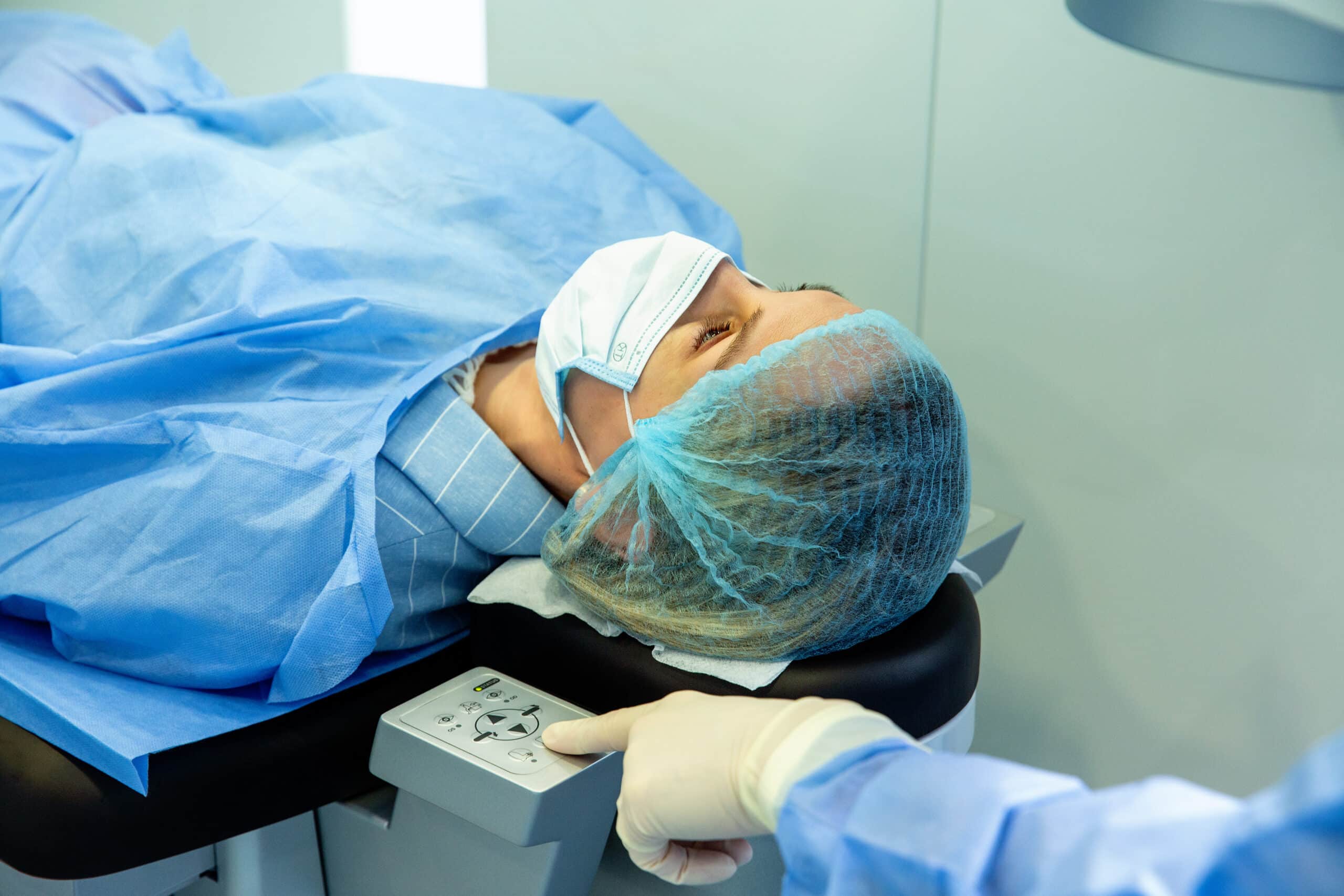
Laser vision correction in Odesa and Kyiv is carried out within 10-15 minutes, while the laser exposure itself does not exceed 30-40 seconds. Local eye drop anesthesia excludes any painful feelings. Excellent result of laser eye correction is attained with minimum risk of complications and with the shortest recovery period. Laser vision correction is performed without hospitalization, just in one single day.
How does a laser fix your vision?
The human eye is a complex optical system. Light beams pass through eye refractive media – cornea, lens, vitreous body. When they are focused on the retina, we get a clear image, that is, we can see well. In this case, we can say that the optical system of the eye has normal refraction – refracting power. When we have refractive disorders such as myopia, hyperopia, or astigmatism, the light is not focused on the retina and the person sees very blurred. The aim of refractive disorder correction is to change the refracting power of the eye optical system to focus the light beams strictly on the retina.
The basic principle of refractive disorder correction (myopia, hyperopia, astigmatism) with laser is as follows: the cornea is reshaped so that light beams are focused strictly on the retina to clear the vision. The excimer laser affects the upper or middle layers of the cornea, depending on the technique. When the laser affects the middle layers, the epithelium (the upper protective layer of the cornea) is not affected. A corneal flap is formed during the correction to provide access to the middle layers and after the laser treatment is done, it is put back and firmly fixed by its collagen substance.
Since 1985, when laser vision correction was performed for the first time, technology has been constantly improving and new methods have been created to offer better possibilities for solving vision disorders.
Contraindications for excimer laser vision correction
Laser vision correction is contraindicated in some eye diseases (cataract, glaucoma, keratoconus) and general diseases (air embolism, diabetes, acute tuberculosis, etc.).
When the laser correction is done
The patient sees well right after the laser correction and the vision is normalized in a week.
After this procedure, you can enjoy your usual lifestyle, as there are no restrictions on physical and visual activity. The only exception is visiting the swimming pool, baths, saunas, going for a swim in water bodies, using decorative cosmetics, which are recommended to avoid for a few days after the correction.
Laser correction and old age
The perfect age for laser correction is between 18 and 45. Before the age of 18, the body is still developing, and as the eyeball grows, the vision may change. After the age of 45, laser correction is possible as well, but you should keep in mind that it won’t prevent the occurrence of age-related hyperopia (presbyopia). Anyway, a doctor shall make a final decision on the possibility of laser correction based on individual diagnostic indications.
Laser correction during pregnancy
Laser vision correction has no negative impact on the upcoming pregnancy or the way of delivery. The only restrictions for laser vision correction are the periods of pregnancy and lactation. It is explained by changes concerning hormonal background in a woman’s body that can result in alterations to the vision system. The result of laser correction performed during this period can be unstable.
Your doctor shall decide on the possibility of laser vision correction. If correction is not possible, Eximer Ophthalmology Clinic offers other methods of vision correction, such as phakic lens implantation or refractive eye lens replacement.
Laser vision correction: stereotypes
Women before their first pregnancy should not undergo laser correction
This is the most common misconception about laser correction. This prejudice is probably related to the fact that many people still do not distinguish between excimer laser correction and the surgical incision method of keratotomy, which indeed can impose such limitations. Typically, during pregnancy and childbirth, difficulties arise in women with retinal problems. Laser correction affects the cornea and not the retina. Therefore, laser correction has no effect on delivery and pregnancy.
Your vision will still get worse after laser correction
The laser correction result will not change with time. This fact has been proven over time. After all, vision correction underwent multi-phase clinical trials before being used in ophthalmology clinics around the world. Myopia progression does not depend on whether you had laser correction or not. Nevertheless, no dramatic visual impairment has been documented since 1985 when laser correction was first used. Therefore, laser correction is a proven method for the surgical treatment of myopia.
Laser correction is not allowed for children, which means it is not safe
Correction before the age of 18 is not recommended because at this age the vision may change as the whole body, including the eyeball, keeps growing. Laser correction has passed through several stages of clinical trials before being used in ophthalmology centers and clinics. Long-term observations have shown that excimer laser does not cause any disorder because it affects only one of the refractive media – the cornea, and the impact is strictly limited.
No sports after laser vision correction
Excimer laser correction is the only way to restore eyesight when extreme loads are experienced by such people as astronauts, test pilots, alpinists, stuntmen. There are no limitations and restrictions for physical training and sports after laser vision correction. No wonder, many National Hockey League players, tennis players, biathletes, racing drivers, and astronauts have gained good eyesight with laser correction.
Plenty of restrictions after the surgery
The rehabilitation period after laser vision correction is minimal. Minor discomfort after the correction disappears in 30-40 minutes, and the final recovery of visual functions takes several days. Immediate restrictions are quite slight and mostly relate to hygienic procedures (swimming pool, sauna, cosmetics use). Further on, there are no restrictions, including physical exercises.
WaveLight® EX500 is a cutting-edge laser making the procedure of vision correction as safe and predictable as possible while rehabilitation becomes easier. And it’s all possible with our unique 5D technology!